What I'm working with
Pretty basic starter setup. Nothing fancy but it gets the job done for through-hole work.
| iron | YIHUA 926 III soldering station with adjustable temp. better than a one temp iron for not burning joints. |
| solder | Leaded with a rosin core its lowk easier to work with than lead free and melts at a lower temp good for me cuz I'm still learning. |
| flux | Extra flux pen for when the rosin core isn't enough. Helps a lot on older joints that have oxidised. |
| desoldering | Desoldering wick for cleanup. Works well enough but I want a pump eventually. |
| tools | iFixit toolkit for getting into things without destroying them plus a fan pointed to keep fumes outta my face. |
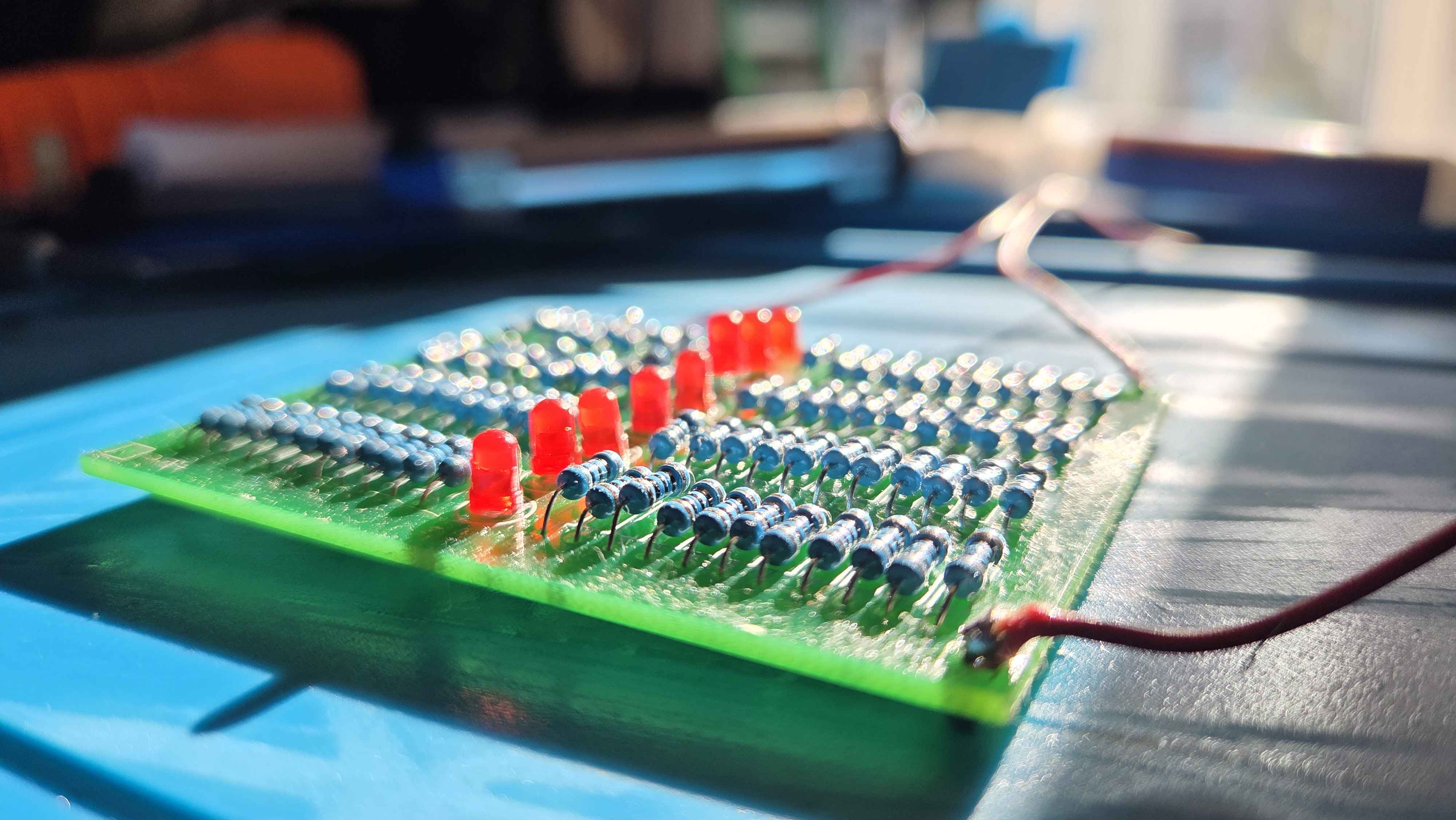
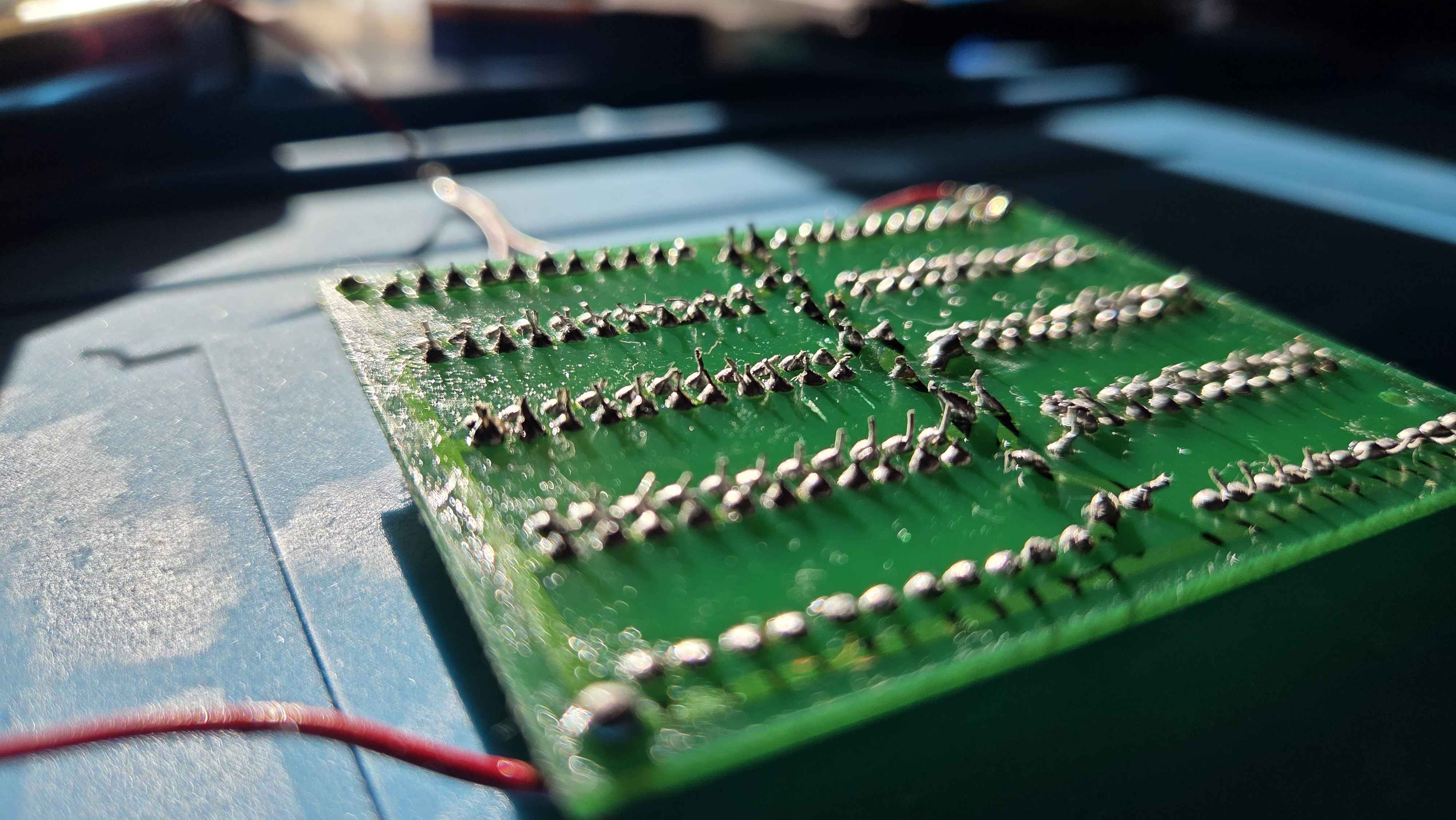
88 resistors and 8 LEDs
Started with a practice PCB kit it had 88 resistors and 8 LEDs. The point wasn't to build anything usefu, just to get practice in. like Tinning the iron getting the right amount of solder on the pad and not holding the heat too long. The first few joints looked okish. By the end they were ok adn were shiny domed and no cold joints.
The LEDs were the most satisfying part since you get instant feedback on whether the circuit worked. mistakes showed up immediately.
Burnt power connector on a Bose 321
i had a Bose 321 media system that had stopped working. Cracked it open and found the power connector had burnt out and the solder joints had corroded and failed probably from heat adn straind on the plug over years of use. The connector itself was fine just the joints holding it to the board had given up.
Cleaned up the old solder with wick added flux and reflowed fresh joints on all the pins. Took a couple passes to get them all looking right the pads were rough, so the solder wasn't flowing as clean as on fresh PCB. Powered it back up and it worked.
It's a good first real repair because the stakes were low the thing was already dead and through-hole power connectors are about as forgiving as it gets. No tiny pads no SMD just chunky pins with plenty of room to work.
Future repairs and whatever comes up
Still only doing through-hole work for now. SMD is on the list eventually but I want to be more consistent with basic joints first. Mostly I'll solder whatever needs fixing broken electronics are everywhere once family and friends find out you can fix em.